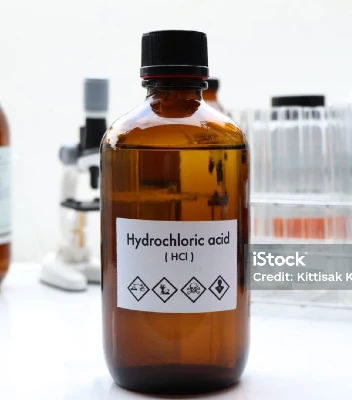
When laboratories measure elements at trace and ultra-trace concentrations, contamination can become a measurement problem. A reagent that appears chemically pure for routine laboratory work may still introduce background elements that interfere with ICP-OES or ICP-MS results.
This is why choosing the right ICP acid is an important part of analytical quality control.
For Australian laboratories performing environmental, mining, pharmaceutical, food, industrial or research analysis, high-purity acid combined with reliable calibration standards can help reduce contamination, matrix effects and uncertainty. Through Inorganic Ventures Australia solutions supplied by Graham B Jackson (GBJ), laboratories can access specialised standards and customised solutions designed for demanding elemental analysis.
What Makes ICP Acid Different?
ICP analysis can measure elements at very low concentrations. ICP-MS, in particular, is routinely used for trace and ultra-trace elemental analysis, meaning that impurities in reagents can potentially become significant relative to the analyte concentration.
ICP acid is therefore selected not simply for its chemical identity—such as nitric acid or hydrochloric acid—but for its purity and suitability for instrumental analysis.
High-purity acids can be used for:
- Sample digestion
- Dilution and preparation
- Calibration-standard matrix preparation
- Cleaning laboratory equipment
- Maintaining consistent analytical backgrounds
For laboratories targeting low-level metals, the objective is straightforward: the reagent should contribute as little contamination as practically possible.
Why Pure Acid Australia Laboratories Matter
Acid purity becomes particularly important when analysing samples at µg/L or lower concentrations.
Consider a simplified example: if a laboratory is measuring an element at 1 µg/L, an acid containing even a small amount of that same element can increase the reagent blank and potentially affect the reported result.
This makes reagent blanks, calibration blanks and matrix matching critical components of a robust ICP workflow.
Acid concentration also matters. Differences between the acid composition of standards and samples can contribute to matrix-related effects, potentially affecting signal response and analytical accuracy.
Therefore, laboratories should consider both:
Chemical purity + matrix compatibility
rather than treating acid selection as a routine consumables decision.
The Role of Inorganic Ventures in ICP Analysis
Inorganic Ventures specialises in inorganic analytical standards for applications including ICP-OES, ICP-MS, ion chromatography and atomic absorption.
Its custom-product approach is particularly relevant when laboratories require something beyond a standard catalogue formulation.
According to Inorganic Ventures, custom solutions can be developed around factors including:
- Elements of interest
- Required concentrations
- Matrix requirements
- Bottle size
- Labelling requirements
- Instrument compatibility
- Annual usage requirements
Its custom solutions can cover nearly 70 elements, with concentrations ranging from low µg/L to high g/L levels. Custom products are prepared gravimetrically from certified stock products and undergo quality-control testing before shipment.
This flexibility can be valuable for laboratories whose analytical methods require specific acid matrices or unusual multi-element combinations.
From Custom Requirement to Finished Standard
A key advantage of a structured custom-standard process is that the laboratory does not have to compromise its method to fit an off-the-shelf product.
The process generally starts by defining the analytical requirement—elements, concentration and matrix. The solution can then be designed, produced and subjected to QC before delivery.
Inorganic Ventures states that its standard custom-product turnaround is 10 business days, although complex requirements may require additional time. Custom solutions are also packaged to support stability and safe transportation.
For laboratories managing scheduled testing programmes, this type of defined workflow can make standard procurement more predictable.
Why Australian Laboratories Should Consider the Complete ICP Workflow
Accurate ICP analysis does not depend on the instrument alone.
A reliable workflow combines:
High-purity reagents – appropriate sample preparation – matrix-matched calibration – traceable standards – controlled handling – quality assurance
Graham B. Jackson supplies Inorganic Ventures reference materials in Australia for ICP, ICP-MS, atomic absorption and related applications. The portfolio includes single-element standards, multi-element mixtures and customised solutions, with documentation supporting traceability and quality control.
For laboratories looking for Pure Acid Australia solutions, the same principle applies: reagent quality should be considered alongside the analytical method, expected detection levels and contamination-control strategy.
Choosing an ICP Acid and Standards Supplier
Before purchasing, laboratories should evaluate:
| Requirement | What to Check |
|---|---|
| Purity | Trace-metal impurity specifications |
| Matrix | Acid type and concentration |
| Application | ICP-OES, ICP-MS or other technique |
| Traceability | Certificate and reference standards |
| Concentration | Appropriate working range |
| Stability | Shelf life and storage requirements |
| Customisation | Ability to create application-specific solutions |
| Support | Technical assistance and documentation |
This approach helps laboratories avoid treating acid and calibration standards as interchangeable commodities.
FAQs
What is ICP acid used for?
ICP-grade acids are used for sample digestion, dilution, calibration-standard preparation, blanks and laboratory cleaning where low contamination is important.
Why is acid purity important for ICP-MS?
ICP-MS can measure elements at very low concentrations. Trace impurities in reagents can therefore contribute to background signals or contamination and affect low-level measurements.
What is the difference between laboratory-grade and ICP-grade acid?
ICP-grade acid is manufactured and specified with analytical applications in mind, particularly control of trace elemental impurities. The appropriate grade depends on the sensitivity and requirements of the method.
Can Inorganic Ventures provide custom ICP standards?
Yes. Inorganic Ventures describes custom solutions based on elements, concentrations, matrices, packaging and other laboratory requirements. Its process includes gravimetric preparation and QC testing.
Where can Australian laboratories source Inorganic Ventures products?
GBJ supplies Inorganic Ventures products to Australian laboratories, including ICP and ICP-MS standards and customised inorganic reference-material solutions.
Improve Confidence in Every ICP Result
At trace-element levels, every component of the analytical workflow matters. Choosing suitable ICP acid, controlling contamination and using fit-for-purpose reference materials can help laboratories produce more consistent and defensible results.
For Australian laboratories requiring Inorganic Ventures Australia solutions, Graham B. Jackson provides access to specialised inorganic standards and technical support—helping laboratories select solutions that align with their analytical methods and quality requirements.
For Further Enquiry Contact: sales@gbjpl.com.au